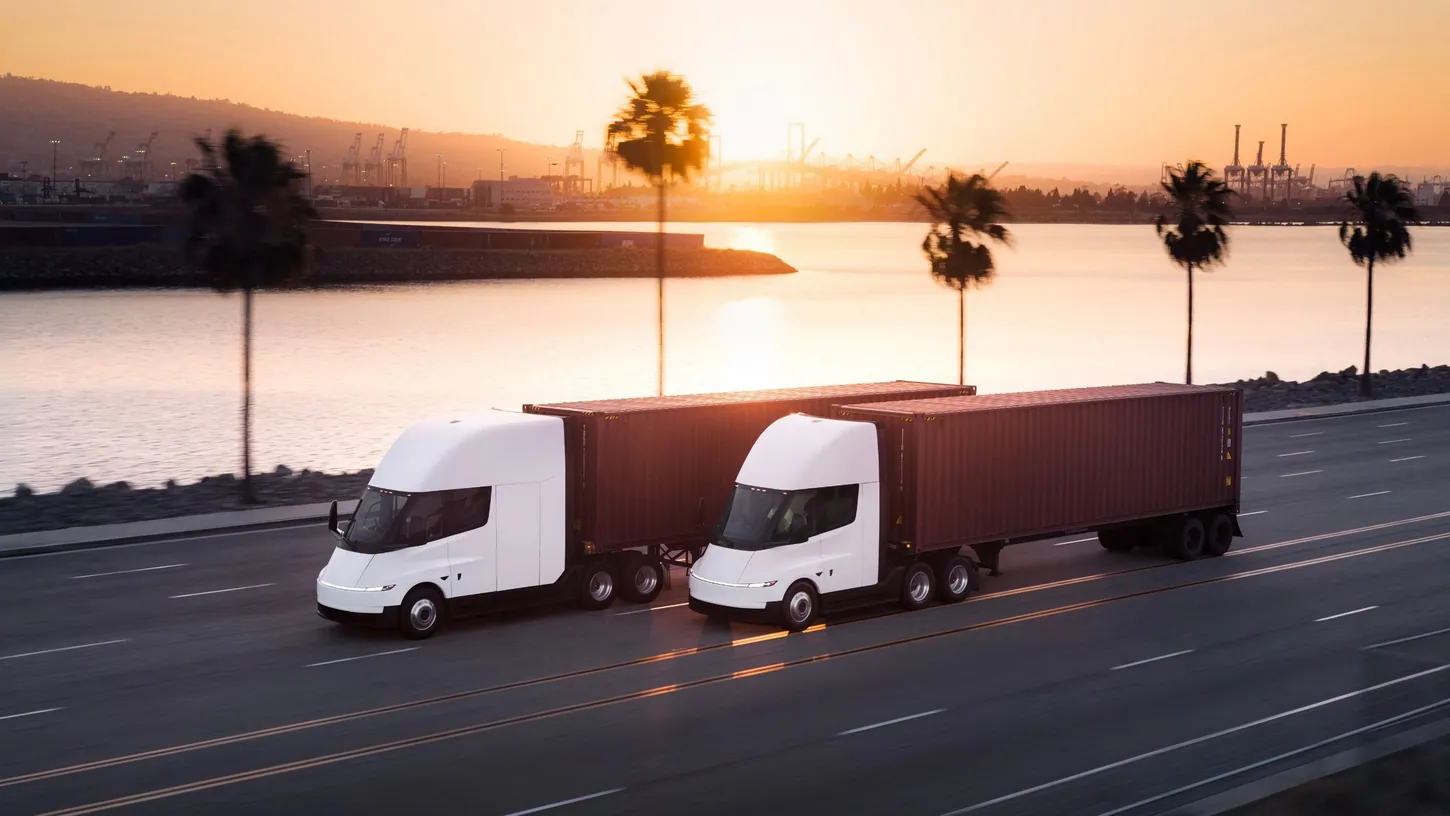
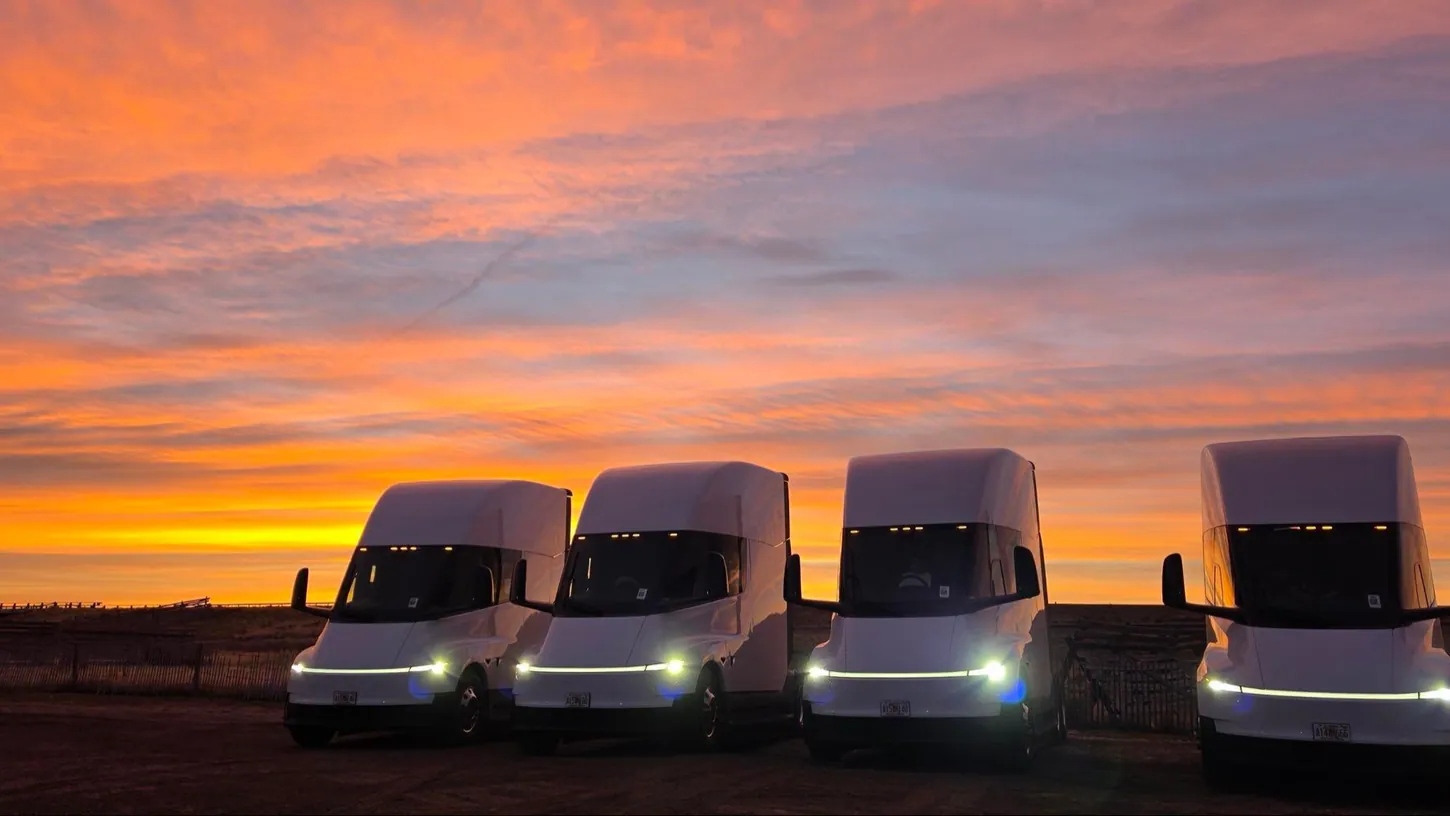
HMD Trucking, a Chicago-area carrier that runs more than 650 trucks, nearly all of them diesel, took delivery of the first Tesla Semi from its 50-truck order on November 2. The company says it is the first Semi registered in Illinois. On November 17 its chief operating officer, Michael Mahler, published the numbers behind the order.
HMD ran one Semi for 4,000 miles (6,437 kilometers) over the summer with a loaded dry van trailer and averaged 1.74 kWh per mile. On a 400-mile (644-kilometer) regional day, Mahler puts diesel at about $387 and the Semi at $84 when it charges at HMD’s own depot.
Every one of those miles was driven in summer. The trucks start work in a Chicago winter, and HMD is keeping all of its diesels.
HMD Puts a 400-Mile Day at $84 on Depot Power and $387 on Diesel
HMD’s comparison takes a diesel tractor at 6.5 mpg burning about 62 gallons at $6.29 a gallon, or $387 for the day. The Semi needs 696 kWh for the same 400 miles: about $244 at a Megacharger rate of $0.35 per kWh, or $84 at HMD’s depot rate of $0.12.
The figures come from Mahler’s post on HMD’s blog, and every input is HMD’s own. The saving depends on where the truck plugs in. At the depot it is $303 a day. At the Megacharger price HMD assumes, it drops to $143.
HMD doesn’t say what the trailer weighed during the trial, and consumption follows weight. RoadOne IntermodaLogistics reported 1.9 kWh per mile on aluminum loads averaging 38,000 pounds (17,200 kilograms).
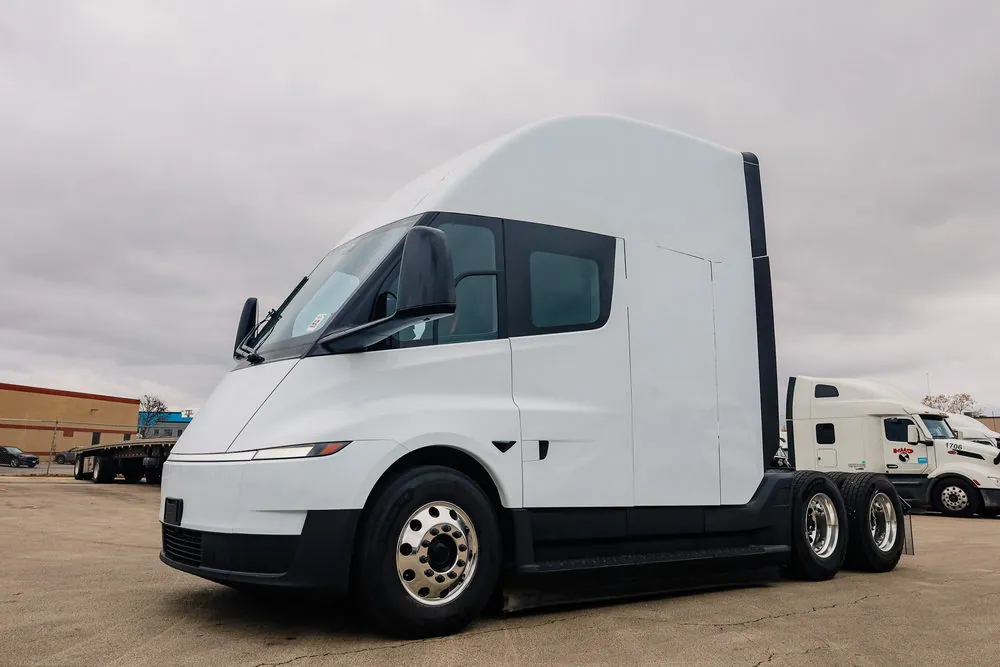
Mahler writes that the purchase “wasn’t an experiment or a marketing stunt.” Two months ago the company had less to show. At Tesla’s September 24 production launch in Sparks, Nevada, co-founder and CEO Henry Malukas told MotorTrend of the fuel savings, “We don’t have real numbers yet.” He couldn’t give the magazine a price either, and HMD’s post doesn’t state one. MotorTrend put the order at a potential $15 million, based on rumors of about $300,000 a truck.
The Semis Start Work in a Chicago Winter the Trial Never Saw
The 1.74 kWh figure was measured in summer, and HMD says it will now track three things in the cold: the energy the battery pack uses to stay warm when parked in single-digit temperatures, the draw of the cab heater, and how regenerative braking behaves on black ice.
Dispatchers will use the heater data to shorten each truck’s daily radius in winter, Mahler writes. Malukas told MotorTrend that his yards see 10 to 20 degrees below zero Fahrenheit (minus 23 to minus 29 Celsius). On those nights, he said, HMD keeps crews in the yard to get diesels started or leaves the trucks running, and the fuel can gel on the road.
Malukas also gave the only winter figure in the record so far. A Semi left plugged in at the depot preheats its pack and loses little range, he said. One parked outside overnight without a plug spends about 20 percent of its charge in the first half hour warming itself up. He called that an easier loss to live with than a night crew.
Tesla’s Semi account posted on November 11 that “Chicago’s first 50 Semis” were on their way, without naming a customer. Mahler’s post six days later says HMD’s other 49 are coming. Tesla announced a six-stall Megacharger in Hodgkins, Illinois, on November 10, and the announcement gave no price for charging there.
HMD Keeps Its Diesel Fleet and Says FSD Does Not Run on the Semi
HMD says it is not getting rid of a single diesel. The Semis will run local and regional loops out of the Chicago Ridge yard and recharge there during off-peak hours. Long-haul freight stays on diesel trucks that cover about 1,000 miles (1,609 kilometers) per tank.
Mahler’s reason is charging. He writes that megawatt chargers don’t exist yet along cross-country corridors, and he uses a rural truck stop in western Nebraska as the example. His boss sounded less patient in September. Asked by MotorTrend whether electric trucks would eventually replace the whole fleet, Malukas said they would.
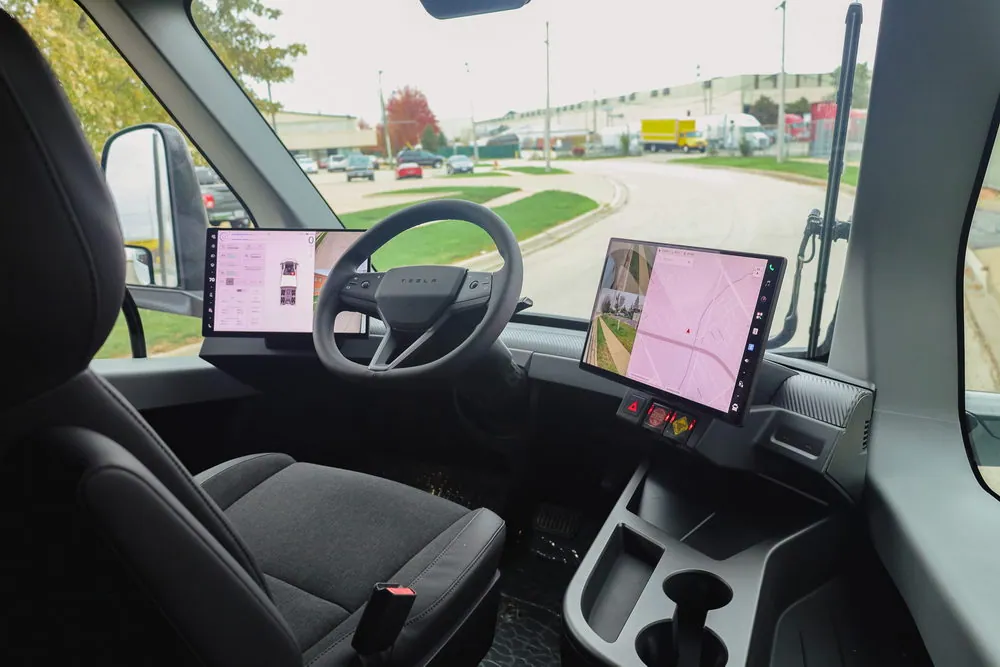
The Semi has 10 exterior cameras, but Full Self-Driving does not work on it at all, Mahler writes, and a professional driver handles every mile. He says the center seat can feel weird at first, the same reaction FreightWaves’ Adam Wingfield had after driving a production Semi in Nevada.
EVXL’s Take
HMD’s post is the most useful Semi document a customer has published so far, because it shows the inputs. Anyone can redo the math with their own diesel price and their own electricity rate, and it tells you the saving comes from the depot. A fleet that has to buy most of its energy at a public Megacharger gets less than half of it.
I’d still hold the 1.74 figure loosely. It is a summer number from one truck with a trailer weight nobody has stated, and my read is that the winter figure will be the one other Midwest fleets care about. HMD says it will share its cold-weather results. If it publishes kWh per mile for January the way it did for the summer, that will be the first winter figure I’ve seen for this truck from a fleet that paid for it.
Sources: HMD Trucking, MotorTrend, Tesla Semi on X
EVXL uses automated tools to support research and source retrieval. All reporting and editorial perspectives are by Haye Kesteloo.