
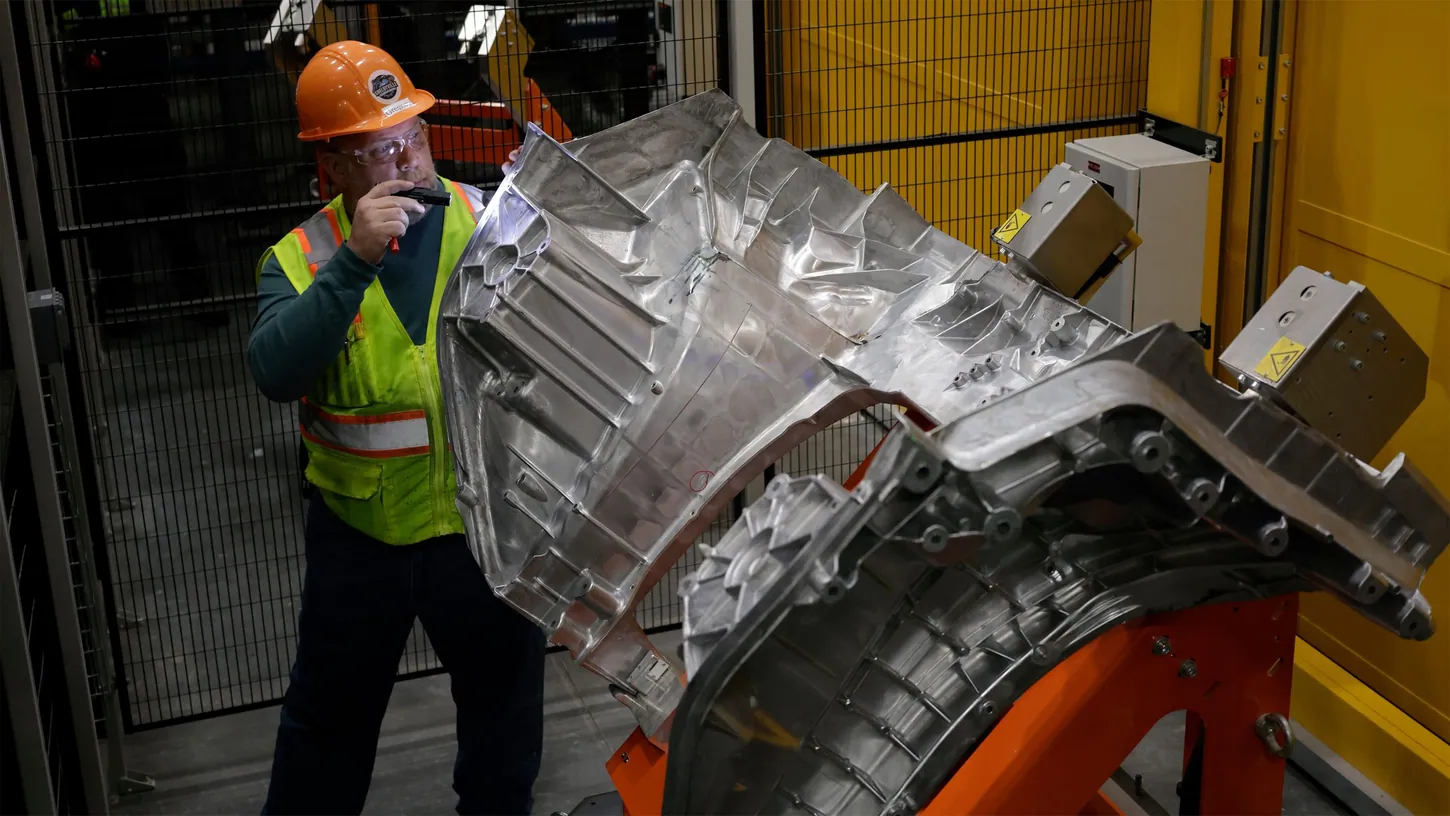
Ford has cast more than 5,000 large aluminum unicastings for the Fathom, its $28,350 midsize electric pickup, and is using them to build prototypes at Louisville Assembly Plant in Kentucky ahead of the truck’s 2027 launch. Vladimir Bogachuk, Ford’s chief engineer for advanced vehicle structure architecture, safety, durability and NVH, gave the number in a post on Ford’s From the Road site on October 28, 2026.
Each truck gets two of them, one front and one rear, and together they replace 146 structural parts. CEO Jim Farley posted the milestone on X the same morning: “We aren’t stripping out features customers want. We’re innovating.”
The castings are the structure under the truck EVXL has followed since Ford showed the platform in August 2025 and spy photos caught a prototype in Long Beach in June. Bogachuk’s post says the parts were engineered for modular repairability. It gives that subject one sentence.
Two Aluminum Castings Replace 146 Structural Parts on the Fathom
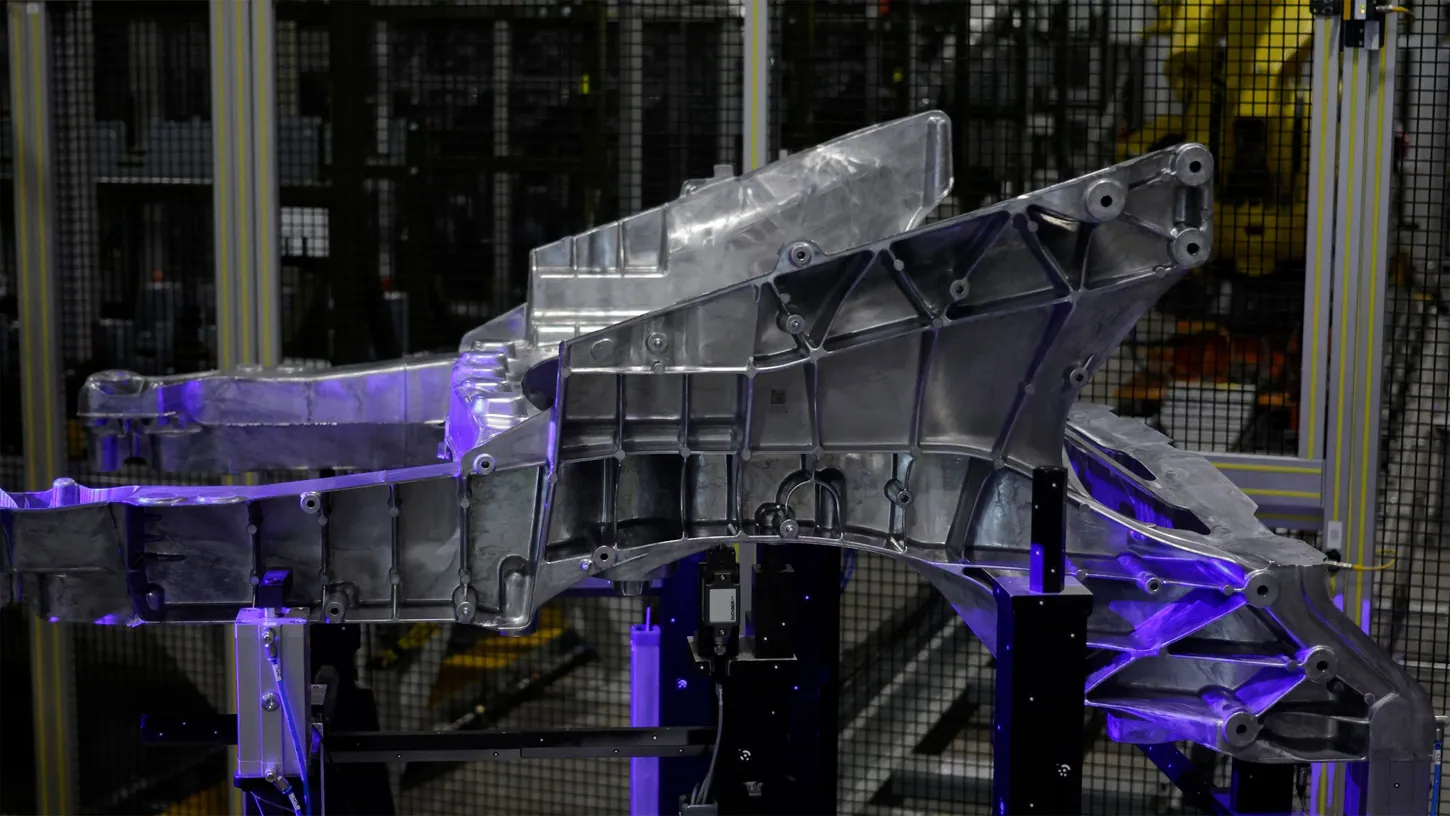
Ford pours the Fathom’s front and rear structures at Shelbyville Technical Center, where more than 5,000 have been cast so far. The two castings replace 146 separate structural parts and, Ford says, cut mass and improve energy efficiency. Every batch is held until it passes inspection before shipping to Louisville.
Bogachuk’s post walks through the line. Aluminum ingots are melted at about 1,300°F (700°C) and injected into a front or rear mold. A robot pulls the casting and moves it to a quench tank, and an operator checks it by eye. After machining, each part is measured on a coordinate machine and X-rayed for internal defects. An optical scanner checks the surface, and a materials lab tests tensile strength and alloy composition. Ford says the team is working to shorten the casting cycle time, and it does not say how many of the 5,000 passed.
The castings are what make possible what Ford now calls its Universal Production System, the term both Farley and Bogachuk use. Louisville splits a conventional line into three branches that build the front, the rear and the battery floor at the same time, then joins them. Ford put that process at up to 40% faster than its current assembly when it announced the platform last year. In February, Alan Clarke, the former Tesla engineer who leads the program, told Business Insider the structure is “something like 27% lighter” than the best competitor on sale, and that the Fathom’s two body parts compare with 147 on the Maverick.
Ford Lands on Tesla’s 2020 Casting Layout With a $28,350 Truck
Tesla cast the Model Y’s rear underbody as one piece in 2020, replacing 70 parts, and later added a front casting with a structural battery pack between them. Ford’s front-and-rear pair is that layout. The difference is the price of the truck on top: $28,350 before a $1,595 destination charge.
Ford named the truck on August 6 and lists it at $28,350 with a standard-range battery, pre-orders opening in early 2027 and no EPA range yet. Business Insider reported in February that Ford bought its press from the same Italian supplier Tesla uses, which it did not name.
Big castings have not been a straight line for anyone else. Reuters reported in 2024 that Tesla backed away from casting nearly the whole underbody in one piece. Hyundai pushed its $730 million hypercasting plant from 2026 to as late as 2028. And Ford itself is doing this ten months after it killed the F-150 Lightning and took a $19.5 billion charge on the EV business that preceded this truck.
Ford Promises Modular Repairability and Gives No Detail
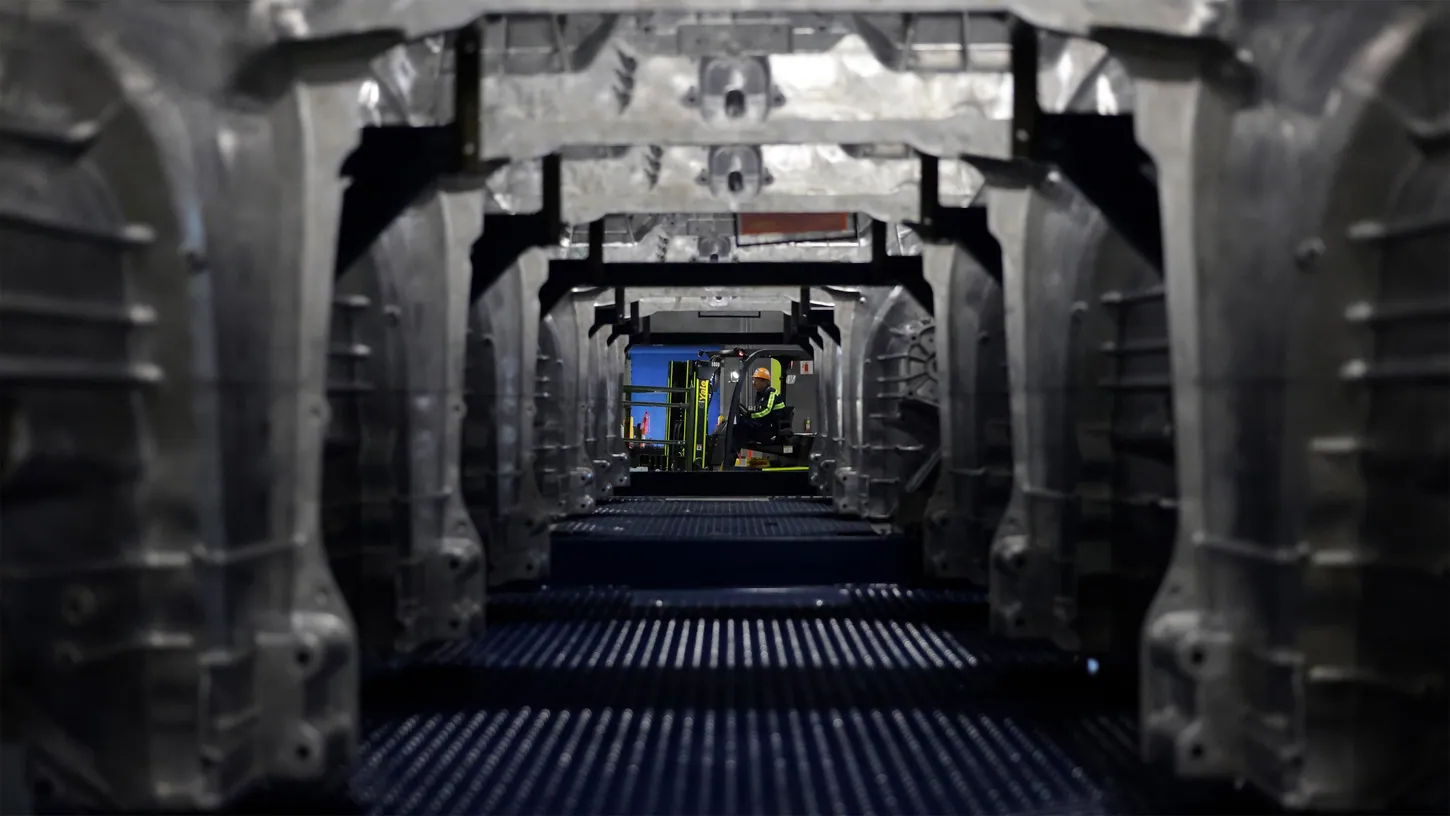
Ford’s post says the unicastings “have been specifically engineered for modular repairability” and nothing more: no description of which section can be replaced and no cost. Repair cost is the standard objection to large castings, and it is the one question this post leaves open.
A front casting that spans the whole structure means a hard front-end hit can touch the piece everything else bolts to. On a $28,350 truck, the insurance rate and the body-shop bill decide whether it is cheap to own or only cheap to buy. Ford has not published either, and I have not asked it to, so that is an open question rather than a finding. Repair procedures normally arrive with the launch, and this truck is a year out.
EVXL’s Take
Five thousand castings is a prototype number, and the figure Ford left out matters more: how many of those 5,000 cleared the X-ray. Tesla has been on that yield curve since 2020, and Ford is starting it in 2026 on a truck due in 2027. I like the engineering, and the parts cut is a real way to get a pickup to $28,350 without, in Farley’s words, stripping out features. My concern is what happens after a crash. Ford’s saving lands in Ford’s factory, and the repair bill for a casting that spans the whole front end lands with the owner and the insurer. Ford should publish the modular repair procedure and a cost estimate when the truck goes on sale, and I want to see both before I call this truck cheap to own.
Sources: Ford From the Road, Jim Farley on X, Ford.com, Electrek, Business Insider via AOL.
EVXL uses automated tools to support research and source retrieval. All reporting and editorial perspectives are by Haye Kesteloo.


