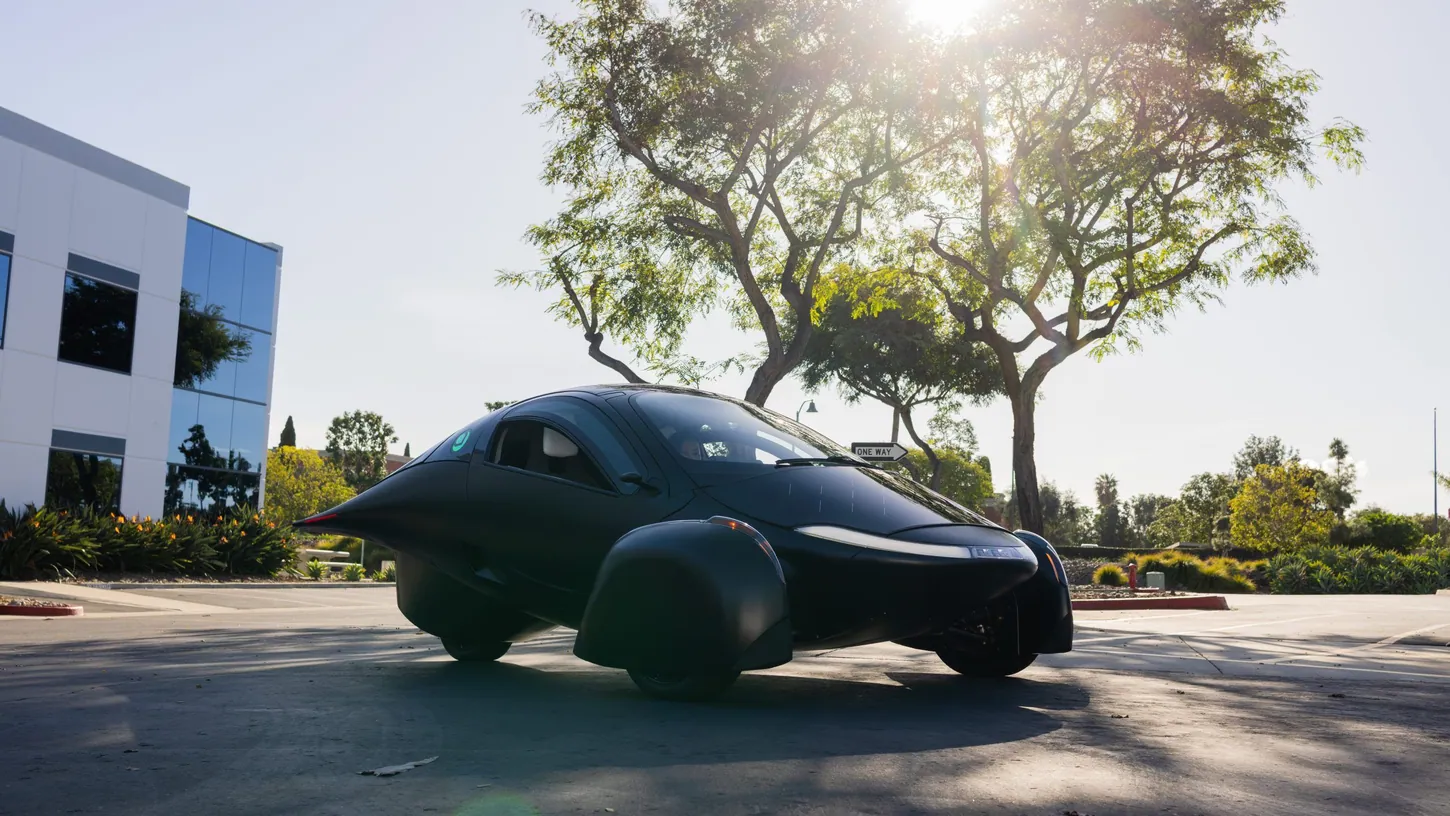
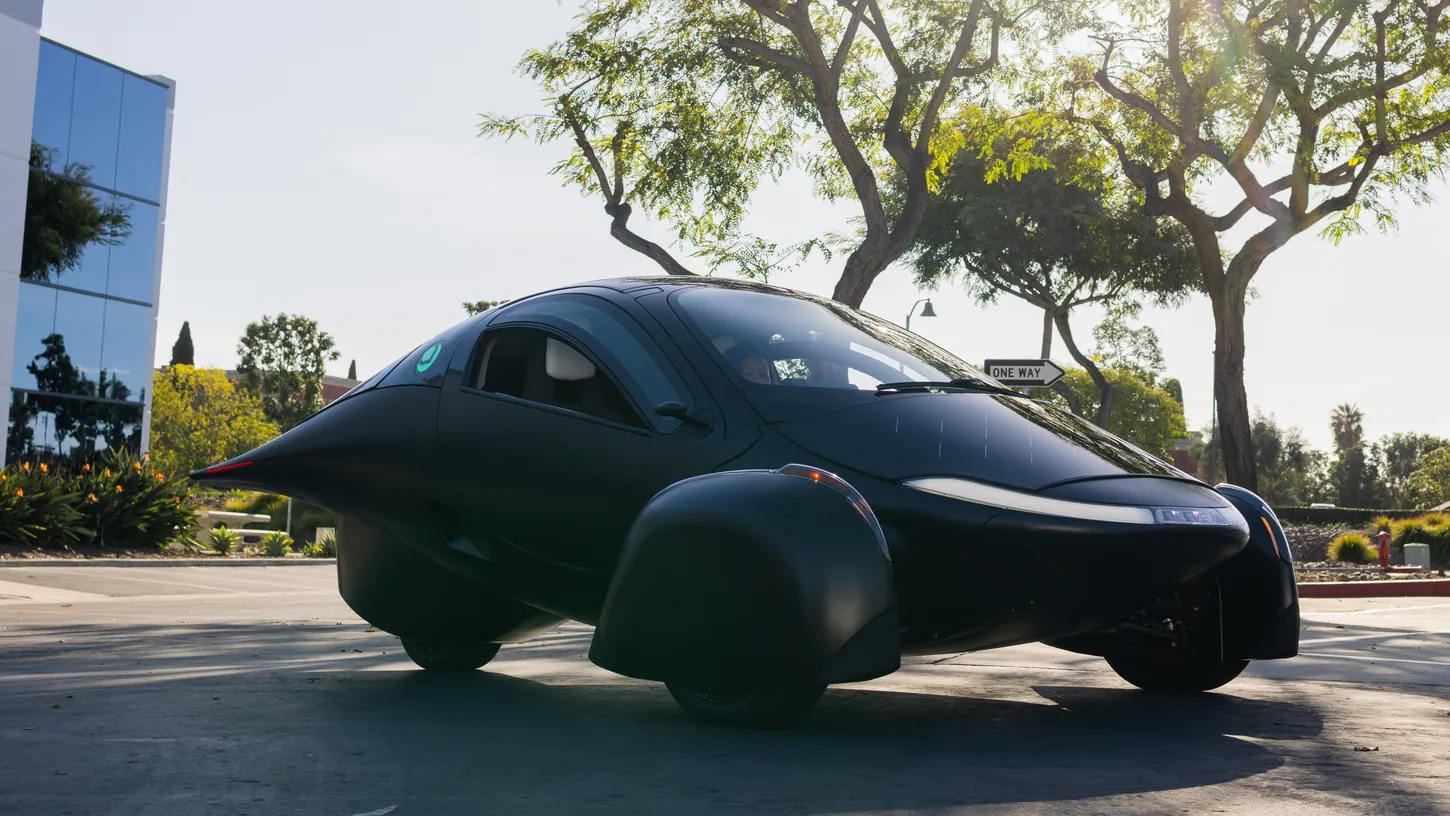
Aptera Motors’ first solar car built for a customer is headed abroad. As the company stated, “Aptera intends to export the vehicle to the customer outside of the United States.” On November 19th, Aptera said it plans to export the finished car to one of its earliest investors.
Aptera didn’t say in the announcement which country the car is going to, when it will arrive, or when U.S. reservation holders will get theirs.
The First Car Goes to Accelerator No. 1
Aptera built the car for Martin Hartono, CEO of GDP Venture, who holds the first Accelerator spot. Accelerators are early investors, and Aptera orders their delivery positions by how much each one put into the company, according to its release.
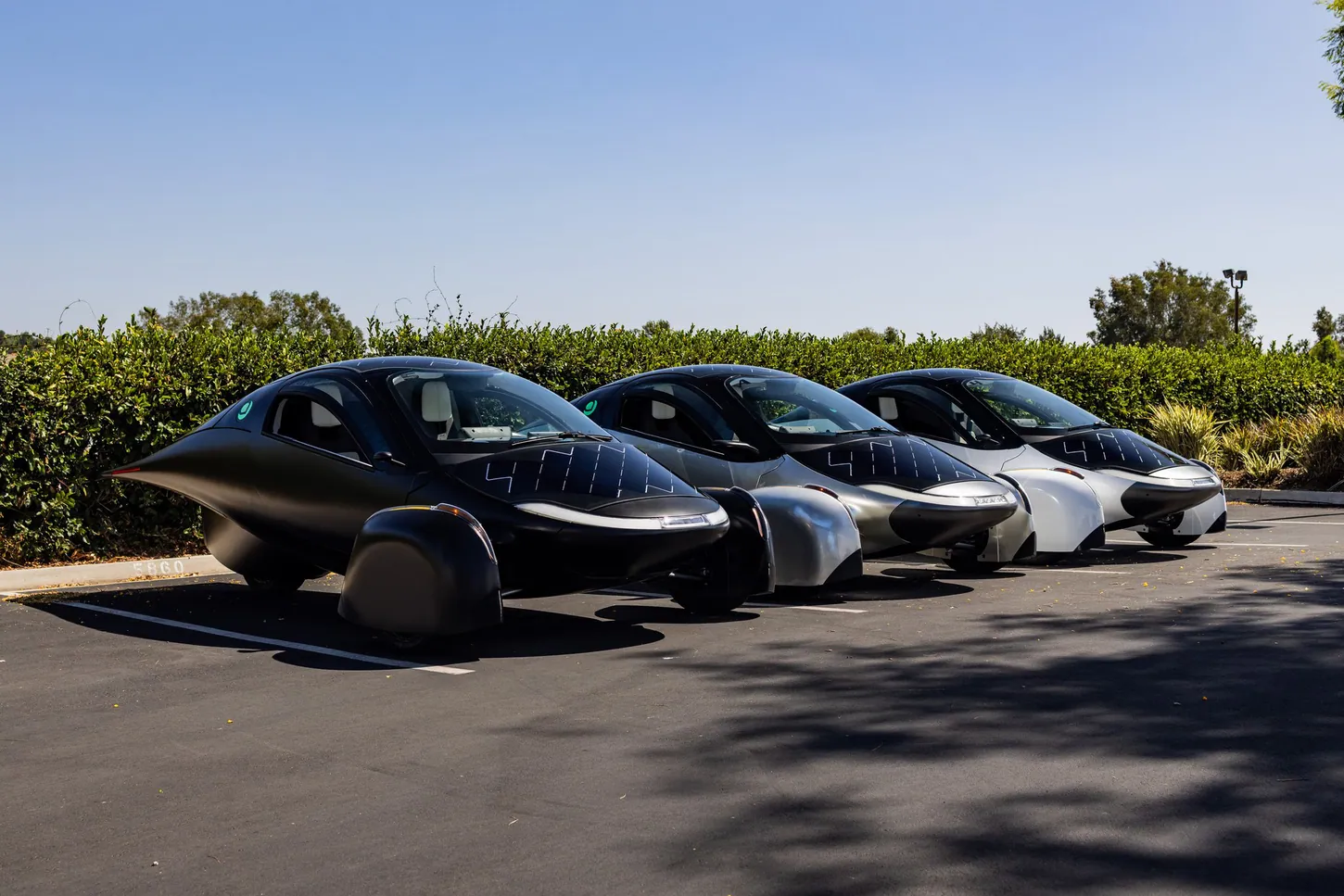
The car is finished in Noir, a matte black Hartono picked. Aptera says the car’s built-in solar panels “are designed to add up to approximately 40 miles of driving a day from sunlight alone, under favorable conditions.” The same release warns it may miss its target of 100 watt-hours per mile in production. Which means the car would be less efficient.
TÜV Rheinland, a testing firm, “independently measured more than 4 kilowatt-hours of usable solar energy” reaching the battery on each of three test days, Aptera said in its November 13th results. This means that if the car hits the efficiency goal of 100 watt-hours per mile then it would be able to derive 40 miles a day from the solar panels.
Aptera’s Delivery Target Got Vaguer in Six Weeks
On October 1st, Aptera said it planned to “begin building its first 40 production vehicles by the end of 2026” and “to begin customer deliveries in early 2027,” as long as it raised the money in time. By November 13th, it said only that it would build and deliver production vehicles “as soon as practicable, subject to timely financing and regulatory approvals.”
Aptera received its EPA Certificate of Conformity on June 18th. In July it said the remaining federal requirement before U.S. customer deliveries was compliance with the Federal Motor Vehicle Safety Standards.
Aptera had $9.2 million in cash on September 30th, including $4.1 million of refundable reservation fees, and said its existing cash “is not sufficient to fund its operations for the next twelve months.” It has raised about $6.6 million since then. Aptera’s third-quarter net loss grew to $13.968 million from $5.489 million a year earlier. It estimates it needs about $25 million to reach the start of series production and about $65 million in total to build 500 vehicles a month.
Aptera had more than 49,000 reservations on September 30th. For those holders, nothing changes today, they will just need to wait to hear more. “We’re working to complete more vehicles for early customers as soon as possible,” co-CEO Chris Anthony said.
EVXL’s Take
Aptera’s solar promise is really an efficiency promise. The most efficient car according to the EPA is the 2026 Lucid Air Pure RWD on 19-inch wheels, rated at 146 MPGe, or about 231 watt-hours per mile. On 4 kilowatt-hours of sunshine, the Lucid would go about 17 miles, or a few more because the EPA figure counts charging losses. To hit 40, Aptera has to use about half the electricity of the most efficient car the EPA lists, which I can’t imagine will be an easy task.
Aptera has yet to show it can do that, the delivery dates are gone, and the first customer car is leaving the country. Reservation holders should treat the 40 free miles as a goal until a production car gets an EPA efficiency rating near 100 watt-hours per mile.
Sources: Aptera release, Aptera Q3 results, Aptera EPA release, Aptera October update, EPA fueleconomy.gov
EVXL uses automated tools to support research and source retrieval. All reporting is by Damien Kesteloo, edited by Haye Kesteloo.