
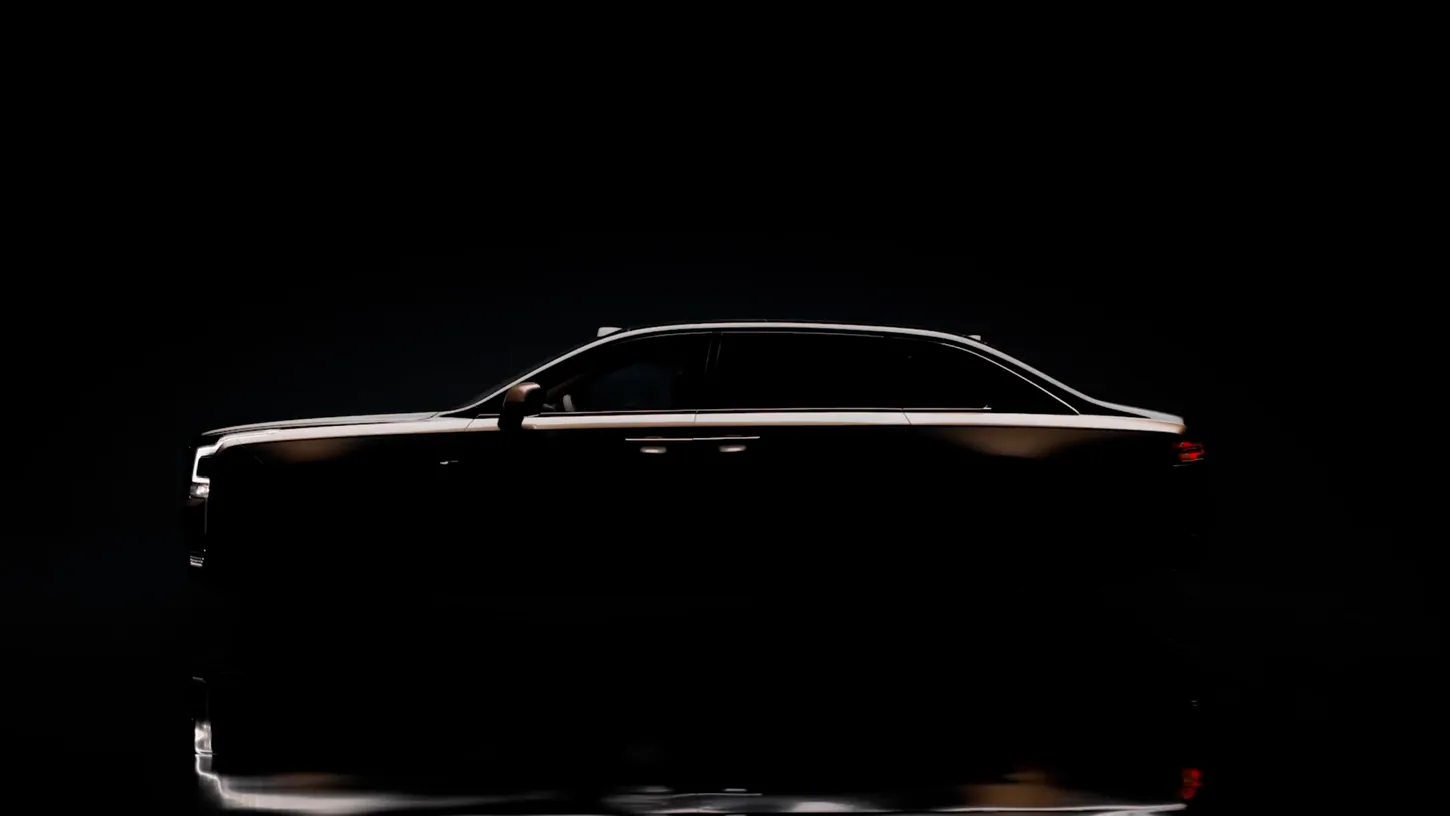
BYD revealed the name of its upcoming Yangwang flagship electric sedan on October 27, six days after confirming plans for an unveiling in the United Arab Emirates. Previously known as Project HU, the car will be called Altior internationally and Dingyao in China.
The announcement establishes the sedan’s identity, but its battery technology, charging capabilities and launch price remain unknown.
Yangwang Names It the Altior Ahead of Its UAE Debut
Yangwang sales division general manager Hu Xiaoqing introduced the name, according to CarNewsChina. Altior comes from the Latin word for “higher,” while the Chinese name Dingyao (鼎曜) pairs the character for the ding, the ancient bronze vessel that inspires the brand’s front-end design, with one meaning brilliance. BYD also shared a short teaser video showing the car in silhouette.
Hu confirmed the UAE unveiling on October 21. BYD has yet to announce a venue or a sales timetable for the unveiling.
A November 5 Dubai Reveal and $300,000 Price Are Estimates
BYD could unveil the Altior in Dubai around November 5, according to an earlier CarNewsChina report citing people familiar with the project. The outlet subsequently clarified that the exact date remains unknown, and the date has not been confirmed by BYD itself.
Chinese media estimates put the price around $300,000 (more than 2 million yuan), compared with about $98,600 (658,000 yuan) for the Yangwang U7’s entry-level version in China. BYD has not confirmed or announced a price for the Altior.
Coach Doors and Lidar Appear, but Specifications Are Missing
The sedan has rear-hinged rear doors, known as coach doors, a long hood, large chrome-finished wheels and a roof-mounted lidar sensor. Lidar uses laser light to detect surrounding objects and can support driver-assistance technology, although BYD has not specified the Altior’s functions.
CarNewsChina reports an estimated length of 217 inches (5,500 mm) and a wheelbase of 132 inches (3,350 mm). Four electric motors and hydraulic suspension have also been suggested, but BYD has not confirmed those features or the dimensions.
BYD Has Not Confirmed the Altior Uses Solid-State Batteries
Solid-state batteries replace the liquid electrolyte found in conventional lithium-ion cells with a solid material. The technology could improve energy density, but commercial production remains a challenge.
In a September interview, BYD executive vice president Stella Li said a vehicle using the technology would appear in 2027. She did not identify the model or promise retail deliveries. BYD’s battery division, FinDreams, plans to begin testing solid-state batteries in vehicles around 2027, with large-scale production expected around 2030.
That timeline leaves open the possibility of a later Altior variant using solid-state cells, but a version like that has not been announced. EVXL previously examined the difference between prototypes and market availability in an earlier battery analysis.
Photos of the sedan at a BYD Flash Charging station have also prompted speculation about megawatt charging. Though, BYD has not published the Altior’s charging power or charging times.
EVXL’s Take
BYD’s luxury brand Yangwang sold only 485 vehicles across its entire lineup in July 2026, according to an earlier EVXL sales report. The Altior could serve primarily as a showcase for BYD’s technology rather than a high-volume seller.
The new name and planned UAE unveiling are real developments. The more important question is what BYD can demonstrate in a production-ready vehicle, and how many customers can actually buy it.
Sources: CarNewsChina, BYD Global on X
EVXL uses automated tools to support research and source retrieval. All reporting is by Damien Kesteloo, edited by Haye Kesteloo.