


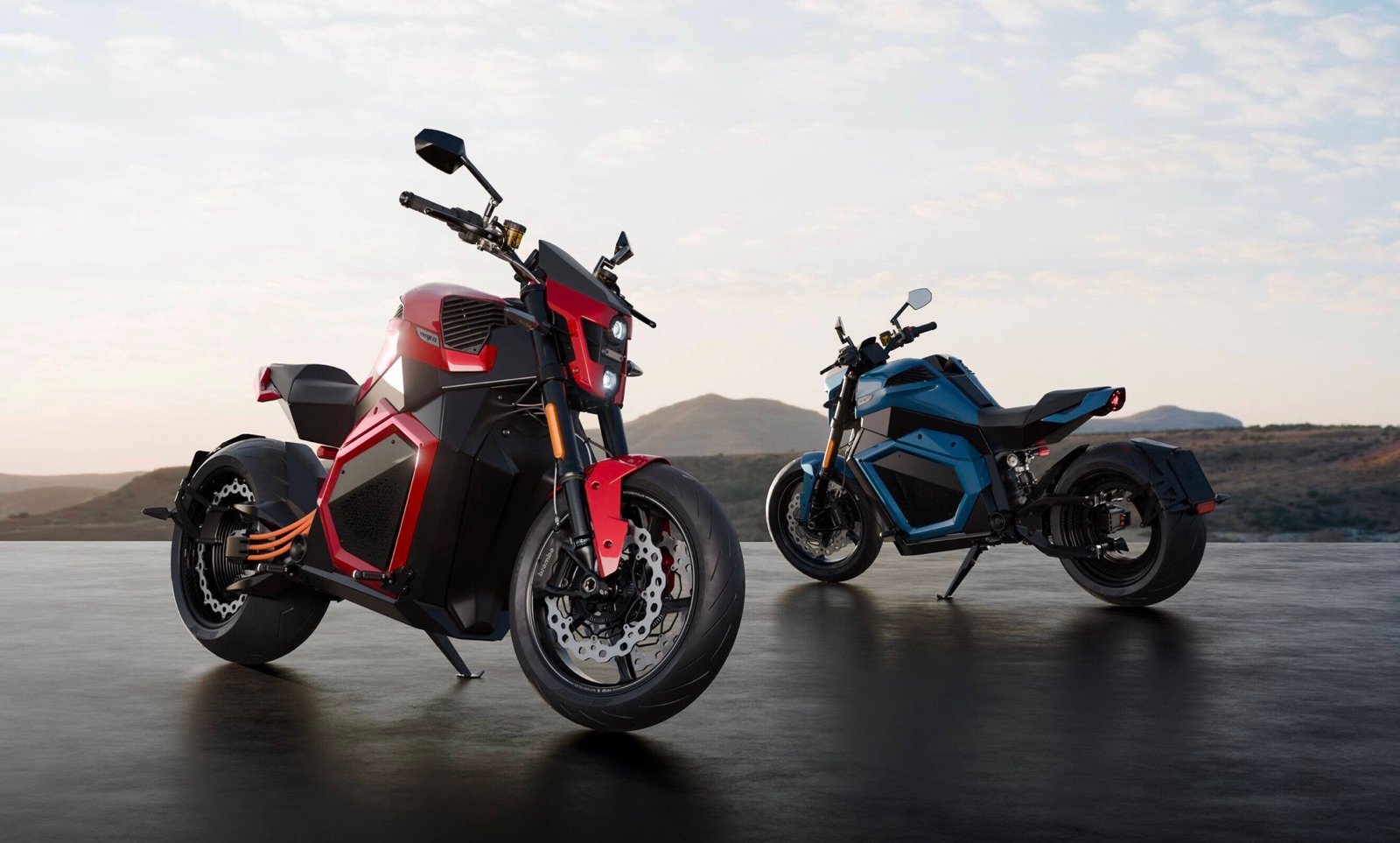
Finnish electric motorcycle maker Verge Motorcycles and its technology spinoff Donut Lab just announced the world’s first production vehicle with solid-state batteries at CES 2026. The $30,000 TS Pro promises 200+ miles of range, sub-10-minute charging, and 100,000 charge cycles. There’s just one problem: the company has shared zero technical data, zero third-party validation, and zero independent testing results.
The Fact: Donut Lab claims its solid-state battery delivers 400 Wh/kg energy density, charges to 100% in five minutes, and operates flawlessly from -22°F to 212°F. The company promises customer deliveries by the end of March 2026.
The Delta: Unlike Toyota, Nissan, and QuantumScape, which have published years of peer-reviewed research and third-party test data, Donut Lab has released no technical specifications about the battery’s materials, chemistry, or manufacturing process. CEO Marko Lehtimäki says he’s protecting “trade secrets.”
The Buyer Impact: Customers putting down deposits on the $29,900 TS Pro are betting on unverified claims from a sub-100-employee startup. The “proof,” according to Lehtimäki, will arrive when motorcycles ship in March.
Donut Lab’s Claims Exceed Every Major Battery Maker’s Published Roadmaps
Donut Lab says its all-solid-state battery achieves 400 Wh/kg energy density, charges from zero to full in five minutes, retains greater than 99% capacity from -30°C to above 100°C, lasts 100,000 charge cycles, uses no rare materials, and costs less than conventional lithium-ion batteries. If true, this would represent a simultaneous breakthrough across every metric the battery industry has struggled to achieve for two decades.
For context, QuantumScape‘s QSE-5 cells target 844 Wh/L volumetric density and 10-80% charging in 12 minutes after 15 years of development and over $1 billion in funding. Toyota has promised solid-state batteries since 2020, pushing timelines back to 2027-2028. Factorial Energy‘s validated cells achieve 375 Wh/kg and 18-minute charging with demonstration fleets not expected until 2026. Rimac says solid-state cost parity with conventional batteries won’t arrive until 2035.
En Washington Post reports that Paul Braun, a professor at the University of Illinois Urbana-Champaign’s Materials Research Laboratory, responded to Donut Lab’s claims with the scientific community’s standard response to extraordinary assertions:
“Extraordinary claims require extraordinary evidence. While no laws of physics appear to be broken, I need to see a lot more data before I am convinced the battery technology is real.”
Kelsey Hatzell, an associate professor at Princeton University who heads a materials science lab focused on solid-state batteries, was more direct. She told The Washington Post that the combination of properties Donut Lab promises “sounds impossible.” Hatzell added that if the cells could actually be mass-produced in Finland as Lehtimäki claims, “that would be shocking to me.”
The “Trust Us” Response Pattern Echoes a Decade of Battery Hype
Donut Lab has declined to reveal any data or technical details about its battery chemistry, citing trade secret protection. CEO Marko Lehtimäki instead asks the world to wait until customers start receiving motorcycles at the end of March. He told The Washington Post:
“We would be just stupid to go and say some lies in front of the whole world where, in a matter of weeks, people will be opening these battery packs and scanning these cells. We don’t need to go and scam people. Every single thing I said in the video is not an exaggeration of any kind. It’s fact, and people will be shocked.”
This response pattern mirrors countless battery startups that have preceded Donut Lab. The EV industry has watched solid-state battery timelines slip for over a decade. Toyota promised production by 2020, then 2023, then 2026, and now targets 2027-2028. QuantumScape initially aimed for commercial production in 2024 and is now shipping samples to partners with field testing starting in 2026. The gap between announcements and actual production has become so predictable that EVXL developed a rule: take any announced solid-state timeline and add five years.
Donut Lab, founded in 2018 with fewer than 100 employees, has raised nearly $60 million from investors including Risto Siilasmaa, the former chairman of Nokia who now sits on the company’s board. The funding is modest compared to the billions poured into solid-state development by Toyota, Volkswagen, Samsung, and CATL.
Verge’s Motorcycle Specs Look Impressive on Paper
Verge Motorcycles is now taking orders for the updated TS Pro in the United States and Europe. The Standard Battery model starts at $29,900 with 20.2 kWh capacity and approximately 217 miles of manufacturer-estimated range. A Long-Range version at $34,900 promises 370 miles with a 33.3 kWh battery pack. Both models feature Verge’s distinctive hubless rear wheel powered by the Donut Motor 2.0, which the company claims is 50% lighter than the previous generation while maintaining the same output.
The original TS Pro has been on the market since 2022 with conventional lithium-ion batteries. That version held a Guinness World Record for the longest electric motorcycle trip on a single charge, covering 193 miles around London. The previous battery offered the same range and price point but weighed more and required 35 minutes for charging compared to the claimed sub-10-minute charging on the new solid-state version.
Interestingly, Professor Braun told The Washington Post that the promised improvements in the overhauled TS Pro are plausible without requiring solid-state technology.
“It might be hard, however, everything stated (except cost) could be done with high-end conventional cells,” he said.
EVXL’s Take
We’ve been documenting solid-state battery promises since EVXL launched, and Donut Lab’s announcement follows a familiar pattern: revolutionary claims, no data, “proof coming soon.” The difference is the timeline. While Toyota, Nissan, and QuantumScape push timelines to 2027-2030, a 100-employee Finnish startup says it’s shipping in March 2026.
The claims strain credibility not because solid-state batteries are impossible, but because Donut Lab promises simultaneous breakthroughs across every metric while better-funded competitors with years more research remain in pilot production. When Nissan announced solid-state prototypes doubling range, we asked whether the company would survive until 2028 to bring them to market. When Toyota promised 40-year battery lifespans, we noted its decade of missed targets.
Donut Lab’s approach is different: rather than publishing research, partnering with established automakers, or submitting to peer review, the company asks customers to place deposits and wait. The proof, we’re told, arrives when motorcycles ship. That’s not how battery technology validation works.
If Donut Lab delivers working solid-state batteries in production motorcycles by March 2026, it will have achieved what Toyota, Volkswagen, Samsung, CATL, QuantumScape, Solid Power, and Factorial have failed to accomplish after spending billions. That’s possible. It’s also possible that customers who put down deposits will discover why the rest of the industry remains skeptical.
The next 12 weeks will tell us whether Donut Lab has cracked the holy grail or simply baked another round of hype. Until then, extraordinary claims still require extraordinary evidence.
Editorial Note: This article was researched and drafted with the assistance of AI to ensure technical accuracy and archive retrieval. All insights, industry analysis, and perspectives were provided exclusively by Haye Kesteloo and our other EVXL authors, editors, and Youtube partners to ensure the “Human-First” perspective our readers expect.
Descubra más de EVXL.co
Subscribe to get the latest posts sent to your email.






 English
  Chinese
  Dutch
Dutch  French (Canada)
  French (France)
  German
  Norwegian
  Portuguese
  Spanish (Argentina)
  Spanish (Mexico)
  Spanish (Spain)